Techno Becomes History
Reflections from the Techno Heritage Panel at Frankfurt’s MOMEM, 30 September 2026
How do we write the history of a musical culture that once seemed to exist entirely in the present? This question was at the heart of a panel held on 30 September 2026 at the Museum of Modern Electronic Music (MOMEM) in Frankfurt am Main. Entitled “Techno as Cultural Heritage: Writing the History of a ‘Memoryless’ Musical Culture”, the event was organised by Matthias Pasdzierny (Berlin University of the Arts / Berlin-Brandenburg Academy of Sciences and Humanities) and Christiane Wiesenfeldt (Heidelberg University) as part of the annual conference of the German Musicological Society (Gesellschaft für Musikforschung).
Bringing together musicologists, DJs, producers, and representatives of the museum, the panel explored how techno’s past can be documented, interpreted, and preserved – and what happens when a musical culture once defined by its immediacy becomes part of our cultural heritage.
© Olga Zaitseva-Herz
For a long time, techno was understood as a musical culture of radical presentness. According to a familiar saying, anyone who could still remember the previous night at the club had not really experienced it. In theoretical discussions of the 1990s, techno was described as a kind of cultural “year zero”, a “house without a subject” (Diedrich Diederichsen), or music at the “zero point of identification” (Jochen Bonz). Its aesthetic power seemed to reside in the moment itself: in collective experience, bodily immersion, and the physical intensity of sound.
Today, this perspective has fundamentally changed. Electronic dance music has been part of global musical life for almost five decades. Local scenes have developed into international networks, clubs have become sites of cultural memory, and DJs and producers have emerged as important witnesses to musical and social transformations.
The recognition of Berlin’s techno culture and French electronic music cultures as intangible cultural heritage in their respective national inventories has brought these developments to wider public attention. What was once perceived as ephemeral is increasingly being documented, collected, exhibited, and historicised. But this transformation raises important questions. What exactly constitutes techno heritage? Is it the music itself, the clubs and their architecture, the technologies, the people, or the social experiences associated with them? And who has the authority to decide which stories are preserved and which are forgotten?
What Can Historical Musicology Learn from Techno?
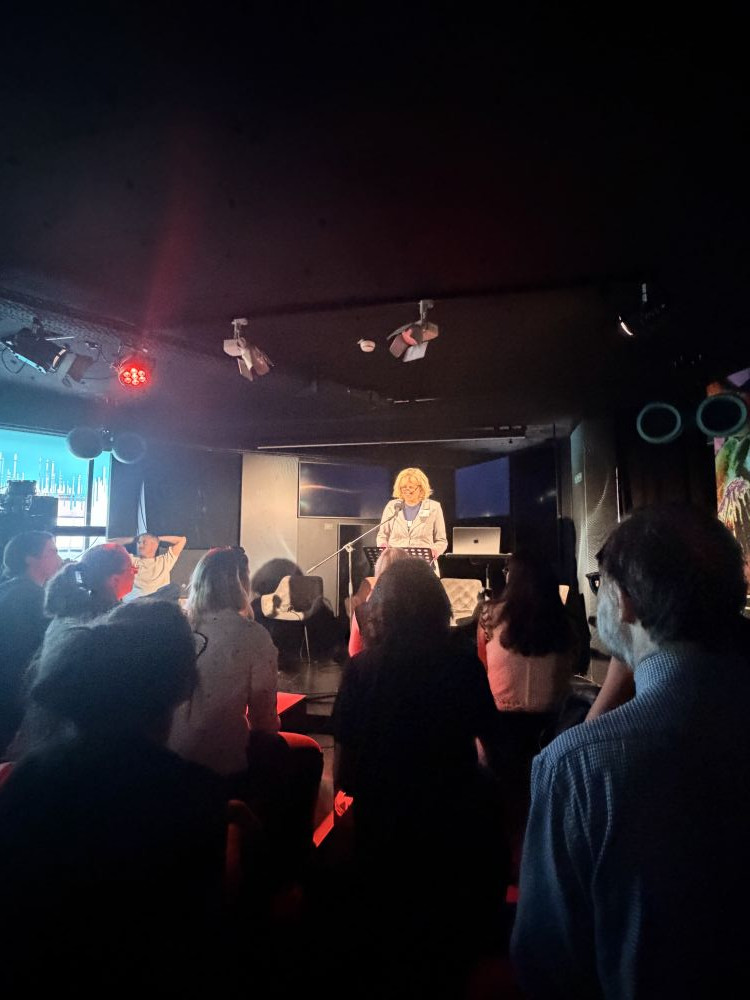
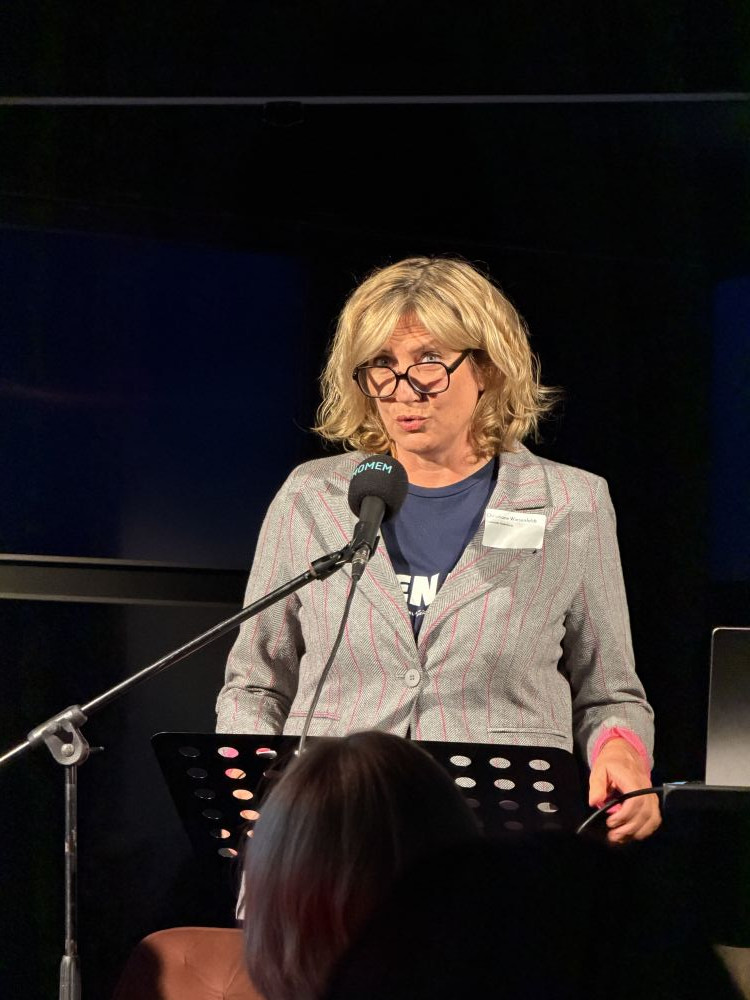
The panel began with two short presentations that approached these questions from complementary perspectives. In her talk, “What Historical Musicology Can Learn from Techno”, Christiane Wiesenfeldt addressed the relationship between techno and the discipline of historical musicology. Although electronic dance music has profoundly shaped musical culture since the late twentieth century, it has remained surprisingly marginal within traditional musicological historiography, particularly in German-speaking academia.
Techno challenges established assumptions about musical works, authorship, sources, and historical transmission. How can we study a musical culture in which the boundaries between composition, performance, production, and reception are constantly shifting? How do we reconstruct musical experiences that were never intended to be preserved? And what kinds of historical evidence become relevant when the music itself cannot be separated from spaces, technologies, bodies, and social practices?
These questions suggest that techno is not simply another subject to be added to music history. Rather, it offers an opportunity to reconsider some of the discipline’s fundamental methodological assumptions. Matthias Pasdzierny’s presentation, “'Never Grow Old' – About the Historiography of Techno”, complemented this perspective. Taking Floorplan/Robert Hood’s 2014 track “Never Grow Old” as a starting point, the contribution aimed to show how different levels of history and historiography intertwine in techno: pop-cultural references, references to the history of technology, and references to the history of techno itself at the level of the published tracks. At the same time, every party and every club night creates its own musical history, for which the tracks ultimately provide only the raw material. When it comes to clubs, we must ultimately speak of “embodied knowledge” and “embodied heritage”—a kind of musical memory expressed through dance. This led to the second point of the presentation: What might a serious musicological historiography of techno look like, and what sources and methods are necessary for it? A particular focus was placed on the observation that, first and foremost, institutions dedicated to preserving the memory of techno—with a thoughtful collection policy—are needed so that this cultural arena is not left solely to social media platforms.
Together, the two presentations established a framework for discussing the possibilities and challenges of writing techno history.
© Olga Zaitseva-Herz
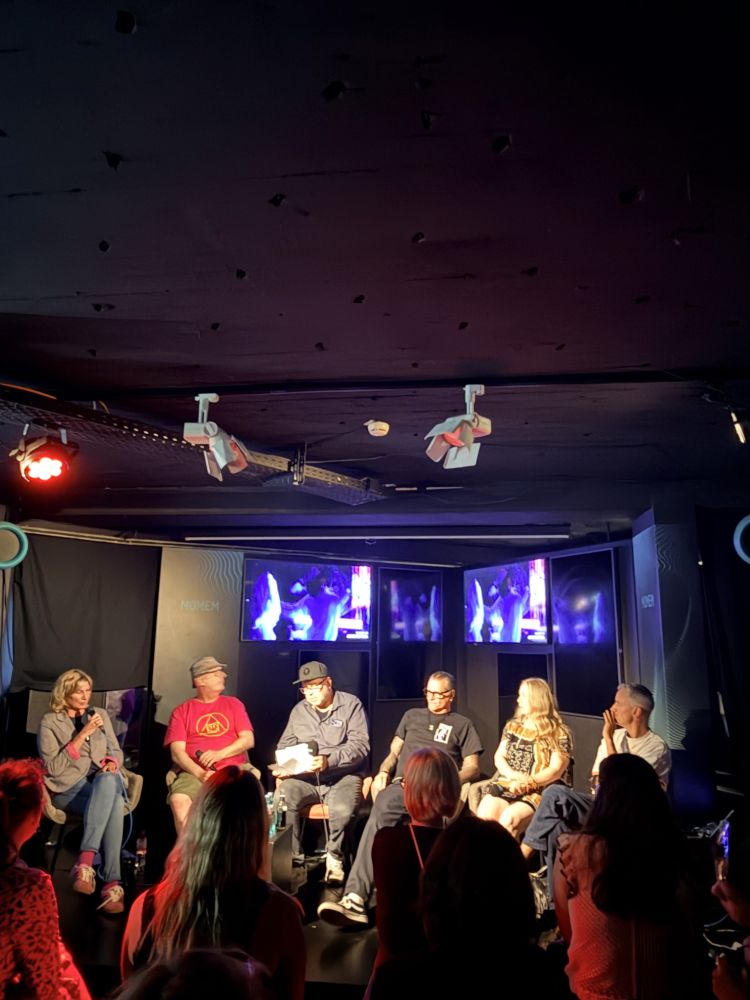
The second part of the event shifted the focus to Frankfurt, one of the most influential centres of German techno culture during the late 1980s and 1990s. Under the title “From Omen to MOMEM: Frankfurt Techno History in the Making”, a roundtable brought together four individuals closely connected to the city’s electronic music culture: Alex Azari (MOMEM), DJ Dag, Antje-Maya Hirsch, and producer and DJ Jörn Elling Wuttke. The discussion was moderated by Christian Arndt (Hessischer Rundfunk).
Frankfurt offers a particularly revealing case study for the transformation of techno into cultural heritage. Its clubs, record labels, DJs, producers, and audiences played a decisive role in establishing electronic dance music in Germany and beyond. The legendary Omen club, in particular, became an important reference point in the history of German techno.
Today, MOMEM represents a different stage in this history. Located in the city where so many important developments took place, the museum provides a space for collecting, presenting, and reflecting on electronic music culture. The transition from Omen to MOMEM is therefore more than a convenient historical metaphor. It captures a fundamental transformation: from the club as a site of musical production and collective experience to the museum as a site of preservation, interpretation, and public memory.
The roundtable brought the perspectives of academic research into contact with those of people who have actively shaped Frankfurt’s techno culture. Such encounters are particularly valuable because techno history cannot be written solely through recordings, printed documents, or institutional archives. It also depends on personal memories, informal networks, individual experiences, and the often fragile traces of club culture.
© Olga Zaitseva-Herz
The Frankfurt panel was conceived as a contribution to a broader discussion about the future of techno historiography. It also highlighted the importance of bringing different communities into conversation: scholars, musicians, producers, DJs, archivists, museums, and those who experienced the scenes themselves.
One of the central challenges is to avoid reducing techno history to a succession of legendary clubs, influential DJs, and iconic recordings. Such narratives are important, but they tell only part of the story. Techno is also a history of collective practices, technological transformations, urban spaces, social encounters, and changing forms of cultural belonging.
The growing recognition of techno as cultural heritage makes these questions increasingly urgent. As memories fade, clubs disappear, and private collections become more difficult to access, documenting the histories of electronic music cultures becomes an important task. At the same time, the process of historicisation should not be understood simply as the preservation of a completed past. Techno remains a living, evolving musical culture. Its history is still being made.
For the Techno Heritage Network, the Frankfurt event offered an opportunity to connect academic perspectives with the experiences and knowledge of those who have shaped the culture itself. It also demonstrated why the history of electronic dance music deserves a more prominent place within musicological research. Perhaps the most important question is therefore not simply how techno became cultural heritage, but how we can write its history without losing sight of the musical, social, and cultural dynamics that made it so influential in the first place.